
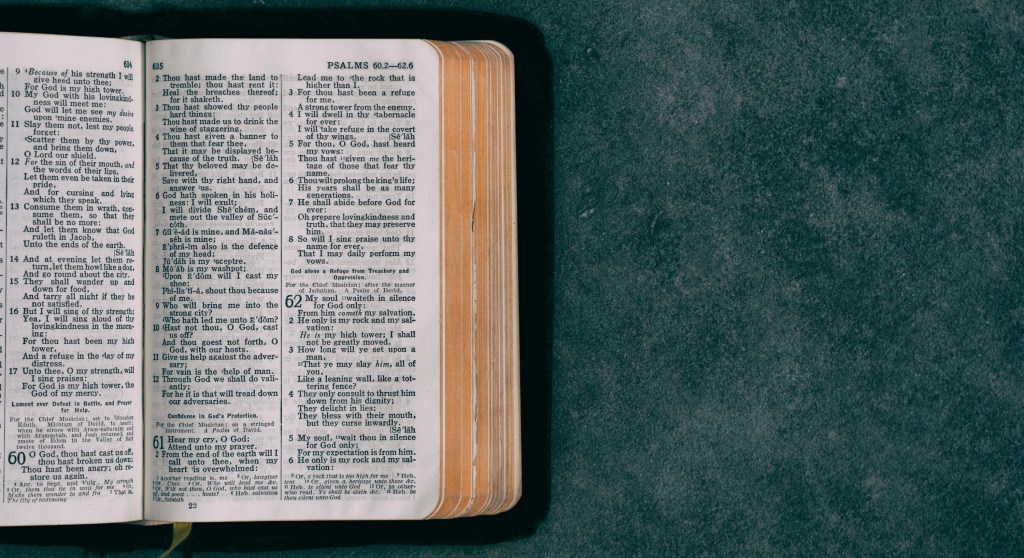
“The faith once for all delivered to the saints.” –Jude 3
Together with Christians throughout history and around the world, we confess and affirm the Nicene Creed (in addition to the Apostles’ Creed, the Athanasian Creed, and the Chalcedonian Definition).
We acknowledge the ecumenical creeds as “concise, formal statements of crucial elements of Christian doctrine”1 that have helped to counteract heresy and clarify the truths of our faith. The Nicene Creed outlines the orthodox and fundamental doctrines concerning God, Jesus Christ, and the Holy Spirit and the economy of salvation. It is the classic, historical articulation of the common faith of believers (Titus 1:4).
The faith is not merely something on our lips but something that forms our lives. We seek to “continue in the faith” (Acts 14:22), “be healthy in the faith” (Titus 1:13), “stand firm in the faith” (1 Cor. 16:13), “contend for the faith” (Jude 3), “hold the mystery of the faith in a pure conscience” (1 Tim. 3:9), and “arrive at the oneness of the faith” with all our fellow brothers and sisters in Christ (Eph. 4:13).
However, like most Protestants, we hold the pure Word of God as the supreme authority and norm for all matters of faith and conduct. The basis of our belief, teaching, and practice is the complete Bible.
With the apostolic faith as our sure foundation, we strive to declare the whole counsel of God (Acts 20:27) to the believers under our shepherding care, so that they may come to a full knowledge of the truth (1 Tim. 2:4) and thus be equipped to realize and participate in God’s economy, which is in faith (1 Tim. 1:4).
Our Faith
The faith affirmed by the local churches is “the faith once for all delivered to the saints” (Jude 3), namely:
- The Bible is the Word of God, written under His inspiration word by word, and is the complete and only written divine revelation of God to man.
2 Tim. 3:16; Deut. 4:2; 12:32; Prov. 30:5-6; Rev. 22:18-19
2 Tim. 3:16 All Scripture is God-breathed and profitable for teaching, for conviction, for correction, for instruction in righteousness.
Deut. 4:2 You shall not add to the word which I am commanding you, nor shall you take away from it, that you may keep the commandments of Jehovah your God, which I am commanding you.
Deut. 12:32 The whole thing that I am commanding you, you shall be certain to do; you shall not add to it, nor shall you take away from it.
Prov. 30:5-6 Every word of God is tried; He is a shield to those who take refuge in Him. Do not add to His words, lest He reprove you and you be found a liar.
Rev. 22:18-19 I testify to everyone who hears the words of the prophecy of this scroll: If anyone adds to them, God will add to him the plagues which are written in this scroll; and if anyone takes away from the words of the scroll of this prophecy, God will take away his part from the tree of life and out of the holy city, which are written in this scroll.
- There is one God, who is triune—the Father, the Son, and the Spirit—co-existing and coinhering in three persons, or hypostases, distinct but never separate, from eternity to eternity.
Deut. 6:4; 1 Cor. 8:4; Isa. 45:5; Matt. 28:19; Matt. 3:16-17; 2 Cor. 13:14; John 14:10-11
Deut. 6:4 Hear, O Israel, Jehovah is our God; Jehovah is one.
1 Cor. 8:4 Concerning the eating of things sacrificed to idols, we know that an idol is nothing in the world and that there is no God but one.
Isa. 45:5 I am Jehovah and there is no one else; besides Me there is no God; I girded you, although you do not know Me.
Matt. 28:19 Go therefore and disciple all the nations, baptizing them into the name of the Father and of the Son and of the Holy Spirit.
Matt. 3:16-17 Having been baptized, Jesus went up immediately from the water, and behold, the heavens were opened to Him, and He saw the Spirit of God descending like a dove and coming upon Him. And behold, a voice out of the heavens, saying, This is My Son, the Beloved, in whom I have found My delight.
2 Cor. 13:14 The grace of the Lord Jesus Christ and the love of God and the fellowship of the Holy Spirit be with you all.
John 14:10-11 Do you not believe that I am in the Father and the Father is in Me? The words that I say to you I do not speak from Myself, but the Father who abides in Me does His works. Believe Me that I am in the Father and the Father is in Me; but if not, believe because of the works themselves.
- Christ, the only begotten Son of God, even God Himself, became a genuine man through incarnation, having both the divine and human natures, the two natures being combined in one person and being preserved distinctly without confusion or change and without forming a third nature.
John 1:18; 3:16; 1:1, 14; Rom. 9:5; 1 Tim. 2:5
John 1:18 No one has ever seen God; the only begotten Son, who is in the bosom of the Father, He has declared Him.
John 3:16 God so loved the world that He gave His only begotten Son, that everyone who believes into Him would not perish, but would have eternal life.
John 1:1 In the beginning was the Word, and the Word was with God, and the Word was God.
John 1:14 The Word became flesh and tabernacled among us (and we beheld His glory, glory as of the only Begotten from the Father), full of grace and reality.
Rom. 9:5 Whose are the fathers, and out of whom, as regards what is according to flesh, is the Christ, who is God over all, blessed forever. Amen.
1 Tim. 2:5 There is one God and one Mediator of God and men, the man Christ Jesus.
- Christ died for our sins and was raised bodily from the dead, has been exalted to the right hand of God as Lord of all, and will return as the Bridegroom for His bride, the church, and as the King of kings to rule over the nations.
1 Cor. 15:3-4; Acts 4:10; Rom. 8:34; Acts 5:31; 10:36; John 3:29; Rev. 19:7; 11:15; 19:16
1 Cor. 15:3-4 I delivered to you, first of all, that which also I received, that Christ died for our sins according to the Scriptures; and that He was buried, and that He has been raised on the third day according to the Scriptures.
Acts 4:10 Let it be known to you all and to all the people of Israel that in the name of Jesus Christ the Nazarene, whom you crucified and whom God has raised from the dead, in this name this man stands before you in good health.
Rom. 8:34 Who is he who condemns? It is Christ Jesus who died and, rather, who was raised, who is also at the right hand of God, who also intercedes for us.
Acts 5:31 This One God has exalted to His right hand as Leader and Savior, to give repentance to Israel and forgiveness of sins.
Acts 10:36 The word which He sent to the sons of Israel in announcing the gospel of peace through Jesus Christ (this One is Lord of all)
John 3:29 He who has the bride is the bridegroom; but the friend of the bridegroom, who stands and hears him, rejoices with joy because of the bridegroom’s voice. This joy of mine therefore is made full.
Rev. 19:7 Let us rejoice and exult, and let us give the glory to Him, for the marriage of the Lamb has come, and His wife has made herself ready.
Rev. 11:15 The seventh angel trumpeted; and there were loud voices in heaven, saying, The kingdom of the world has become the kingdom of our Lord and of His Christ, and He will reign forever and ever.
Rev. 19:16 He has on His garment and on His thigh a name written, KING OF KINGS AND LORD OF LORDS.
- Salvation is by grace alone, through faith alone, in Christ alone and in His completed work, resulting in our justification before God and in our being born of God to be His children.
Eph. 2:5, 8; Rom. 3:24, 28; Gal. 2:16; John 1:12-13
Eph. 2:5 Even when we were dead in offenses, made us alive together with Christ (by grace you have been saved).
Eph. 2:8 By grace you have been saved through faith, and this not of yourselves; it is the gift of God.
Rom. 3:24 Being justified freely by His grace through the redemption which is in Christ Jesus.
Rom. 3:28 We account that a man is justified by faith apart from the works of the law.
Gal. 2:16 Knowing that a man is not justified out of works of law, but through faith in Jesus Christ, we also have believed into Christ Jesus that we might be justified out of faith in Christ and not out of the works of law, because out of the works of law no flesh will be justified.
John 1:12-13 As many as received Him, to them He gave the authority to become children of God, to those who believe into His name, who were begotten not of blood, nor of the will of the flesh, nor of the will of man, but of God.
- The church as the unique Body of Christ, the issue of the work of Christ, is composed of all genuine believers in Christ and, according to the New Testament revelation, is manifested in time and space in local churches, each of which includes all the believers in a given city, regardless of where they meet or how they may otherwise identify themselves.
Eph. 1:22-23; Rom. 12:5; 1 Cor. 12:12; 1 Cor. 1:2; 1 Thes. 1:1; Rev. 1:11
Eph. 1:22-23 He subjected all things under His feet and gave Him to be Head over all things to the church, which is His Body, the fullness of the One who fills all in all.
Rom. 12:5 We who are many are one Body in Christ, and individually members one of another.
1 Cor. 12:12 Even as the body is one and has many members, yet all the members of the body, being many, are one body, so also is the Christ.
1 Cor. 1:2 To the church of God which is in Corinth, to those who have been sanctified in Christ Jesus, the called saints, with all those who call upon the name of our Lord Jesus Christ in every place, who is theirs and ours.
1 Thes. 1:1 Paul and Silvanus and Timothy to the church of the Thessalonians in God the Father and the Lord Jesus Christ: Grace to you and peace.
Rev. 1:11 What you see write in a scroll and send it to the seven churches: to Ephesus and to Smyrna and to Pergamos and to Thyatira and to Sardis and to Philadelphia and to Laodicea.
- All the believers in Christ will participate in the divine blessings in the New Jerusalem in the new heaven and new earth for eternity.
Rev. 21:1—22:5
Rev. 21:1-5 I saw a new heaven and a new earth; for the first heaven and the first earth passed away, and the sea is no more. And I saw the holy city, New Jerusalem, coming down out of heaven from God, prepared as a bride adorned for her husband. And I heard a loud voice out of the throne, saying, Behold, the tabernacle of God is with men, and He will tabernacle with them, and they will be His peoples, and God Himself will be with them and be their God. And He will wipe away every tear from their eyes; and death will be no more, nor will there be sorrow or crying or pain anymore; for the former things have passed away. And He who sits on the throne said, Behold, I make all things new. And He said, Write, for these words are faithful and true…
Rev. 22:1-5 And he showed me a river of water of life, bright as crystal, proceeding out of the throne of God and of the Lamb in the middle of its street. And on this side and on that side of the river was the tree of life, producing twelve fruits, yielding its fruit each month; and the leaves of the tree are for the healing of the nations. And there will no longer be a curse. And the throne of God and of the Lamb will be in it, and His slaves will serve Him; and they will see His face, and His name will be on their foreheads. And night will be no more; and they have no need of the light of a lamp and of the light of the sun, for the Lord God will shine upon them; and they will reign forever and ever.
These seven items broadly represent what we hold as “the faith once for all delivered to the saints” (Jude 3). Although our teachings on other, secondary items are also grounded in Scripture, we acknowledge that genuine believers have historically held to many differing interpretations on these matters and continue to do so today. Therefore we diligently practice to receive all those whom the Lord has received (Rom. 14:3; 15:7).2

Read an expanded version of our faith.
“Holding the mystery of the faith…” –1 Tim. 3:9
References:
 The Church in Waco